


Table of Contents
- Healthy Camels Are the Foundation of Quality Milk
- Camel Nutrition and Feeding Practices
- The Milking Process: Calm, Clean, and Controlled
- Immediate Cooling and Safe Handling
- Testing and Quality Control Before Processing
- Pasteurization: Protecting Safety Without Over-processing
- Small-Batch Bottling for Freshness and Traceability
- Freezing to Preserve Quality
- Cold-Chain Shipping to Your Door
- Which Camel Milk Size Should You Choose?
- FAQs
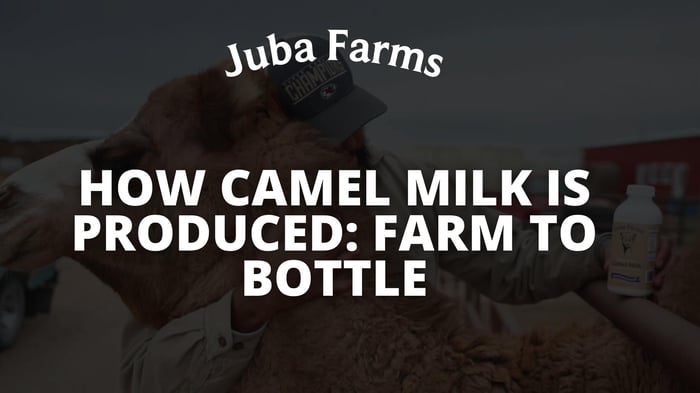
Producing camel milk from farm to bottle is a careful, multi-step process that begins with responsible animal care and continues through milking, pasteurization, bottling, freezing, and delivery. Each stage is handled with precision to ensure safety, quality, and consistency—so the milk that arrives at your door meets the highest standards.
Camel milk has been consumed for centuries across East African, Middle Eastern, and desert cultures. Today, we works closely with trusted partner farms and modern processing facilities to combine this long-standing tradition with current U.S. food safety practices.
This guide walks you through producing camel milk from farm to bottle, step by step, so you know exactly what goes into every bottle.
Healthy Camels Are the Foundation of Quality Milk
The process of producing camel milk from farm to bottle starts with the animals themselves. Milk quality depends heavily on camel health, comfort, and nutrition.
Our partner farms across the U.S. prioritize:
Spacious pasture access
Clean living conditions
Low-stress environments
Routine veterinary monitoring
Gentle daily handling
Camels are naturally resilient animals, but stress, overcrowding, or poor nutrition can affect milk yield and overall quality. That’s why animal welfare is treated as a core part of responsible production—not an afterthought.
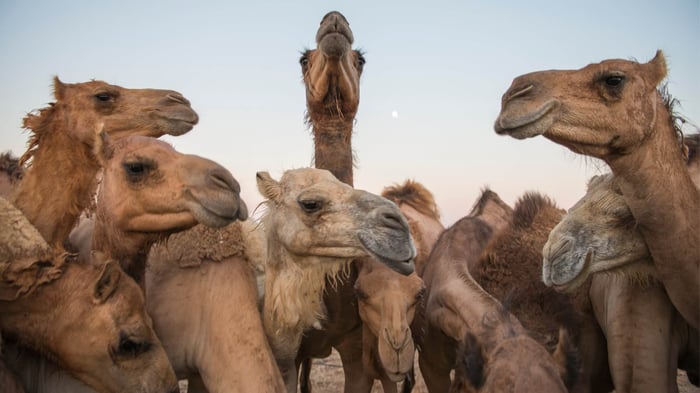
Healthy camels produce better milk, and that shows in both taste and consistency.
Camel Nutrition and Feeding Practices
What camels eat plays a major role in the milk they produce. Our partner farms follow a clean, intentional feeding approach designed to support long-term herd health and consistent milk quality.
Camels are fed:
Organic grasses and hay
A carefully balanced grain blend
No soy, corn, or beans
This feeding program avoids unnecessary fillers and supports steady milk production. While camel milk naturally varies with seasons and lactation cycles, consistent nutrition helps maintain dependable quality year-round.
Proper hydration, balanced minerals, and regular access to pasture all contribute to milk composition, taste, and overall quality.
The Milking Process: Calm, Clean, and Controlled
Milking camels requires patience and experience. Unlike cows, camels are sensitive animals and respond best to familiar routines and calm handling.
Across our farms:
Camels are milked by trained staff familiar with camel behavior
Milking equipment is thoroughly cleaned and sanitized
Milking areas are kept quiet and orderly
Some farms use gentle, vacuum-assisted milking systems designed specifically for camels, while others rely on carefully managed hand-milking. In both cases, cleanliness and animal comfort come first.
The first small amount of milk is typically discarded to ensure the remaining milk collected is clean and suitable for processing.
Immediate Cooling and Safe Handling
Once collected, camel milk is immediately cooled. This step is critical in producing camel milk from farm to bottle safely.
Milk is transferred into sanitized, food-grade containers and kept cold as it moves from the milking area to processing. Rapid cooling helps slow bacterial growth and preserve freshness.
Temperature control at this stage plays a major role in overall milk quality.
Testing and Quality Control Before Processing
Before any camel milk is processed or bottled, it goes through quality and safety checks.
These checks may include:
Microbial screening
Visual and smell inspections
General herd health monitoring
Batch documentation
Only milk that meets strict quality standards continues through production. Any batch that does not meet expectations is discarded rather than blended or corrected later.
This step ensures consistency and safety from pro-farm to bottle.
Pasteurization: Protecting Safety Without Over-processing
All our farms camel milk products are pasteurized. Pasteurization is essential for consumer safety and regulatory compliance.
We uses continuous-flow pasteurization, which:
Reduces harmful bacteria
Preserves natural flavor
Avoids excessive heat exposure
Camel milk is not homogenized, so natural separation may occur. This is normal and expected. A gentle shake after thawing brings the milk back together.
Pasteurization is one of the most important steps in producing camel milk from farm to bottle responsibly.
Small-Batch Bottling for Freshness and Traceability
After pasteurization, camel milk is bottled in small batches. This allows for better oversight and quality control.
Each bottle is:
Filled and sealed on-site
Labeled with batch information
Inspected before freezing
Small-batch bottling helps maintain consistency and ensures every bottle can be traced back through the production process if needed.
Freezing to Preserve Quality
Instead of sitting in refrigerated storage for extended periods, camel milk is frozen shortly after bottling.
Freezing helps:
Lock in freshness
Preserve taste and nutrients
Extend shelf life without additives
Frozen camel milk can be stored for up to six months. Once thawed, it should be kept refrigerated and consumed within about three weeks for best quality.
Freezing is a key part of producing camel milk from farm to bottle for nationwide delivery.
Cold-Chain Shipping to Your Door
Shipping dairy safely requires strict temperature control. Insulated packaging with cold packs or dry ice is used to keep camel milk frozen throughout transit.
Orders ship on a weekly schedule to ensure:
Minimal transit time
Temperature stability
Reliable delivery across the U.S.
This cold-chain system allows customers far from the farm to enjoy camel milk that’s as close to fresh as possible—without compromising quality or safety.
Which Camel Milk Size Should You Choose?
Choosing the right size depends on how often you plan to use camel milk and whether you’re new to it.
Choose the 16 oz Bottle If:
You’re trying camel milk for the first time
You want a smaller, lower-commitment option
You drink camel milk occasionally
You want to see how it fits into your routine
The 16 oz bottle is a popular starting point for first-time buyers.
https://jubafarms.com/products/fresh-camel-milk-16-oz
Choose the 1-Liter Bottle If:
You already drink camel milk regularly
Multiple people in your household use it
You want better value per ounce
Camel milk is part of daily meals or smoothies
The 1-liter bottle is ideal for families and consistent use.
https://jubafarms.com/products/fresh-camel-milk-1-l
Still Not Sure?
Many customers start with the 16 oz bottle and move up to the 1-liter size once camel milk becomes part of their routine. Both sizes are produced and handled the same way from farm to bottle.
If you’re looking for camel milk that’s carefully produced from farm to bottle, Juba Farms Fresh Camel Milk is handled with care at every stage. Our milk is pasteurized, non-homogenized, bottled in small batches, and shipped frozen on a reliable weekly schedule to preserve freshness and quality.
Explore Juba Farms camel milk products and choose the size that fits your needs.
Camel Milk (16 oz)

$39.00
$48.00
Introducing Juba Farms' Pure Camel Milk: Nature's Liquid Gold We are proud to present our 100% Pure Lightly Pasteurized Camel Milk. This incredible super drink offers a remarkable range of health benefits and is sourced from the best camel farms,… read more
FAQs
How often are camels milked?
Most camels are milked once or twice per day depending on lactation stage, season, and herd management practices.
Is Juba Farms camel milk pasteurized?
Yes. All camel milk products are pasteurized using continuous-flow methods to meet food safety standards.
Why is the milk shipped frozen?
Freezing preserves freshness and allows safe nationwide shipping without preservatives.
Does camel milk separate in the bottle?
Yes. Camel milk is not homogenized, so natural separation is normal. Shake gently after thawing.
How long does frozen camel milk last?
Up to six months when kept frozen. Once thawed, refrigerate and use within about three weeks.