


Table of Contents
- What Does Camel Milk Taste Like, Really?
- Is Camel Milk Gamey? Does It Taste Like Goat Milk?
- Camel Milk Taste vs Cow Milk: What's Actually Different?
- Why Camel Milk Tastes Different From Place to Place
- Does Frozen Camel Milk Taste Different? How We Recommend Tasting It
- Does Camel Milk Taste Good? Easy Ways to Try It
- Sources
- FAQs
If you've never had camel milk, the name alone can make you brace for something strange. Maybe someone told you it's salty, or gamey, or basically goat milk. So, what does camel milk taste like? It's one of the first things people ask us, and the honest answer is a lot more ordinary than you'd expect.
The quick answer: Camel milk tastes a lot like 2% cow's milk. It's clean, light and mild, a little less sweet, and some people notice a faint salty note at the finish. Fresh, well-handled camel milk is not gamey and doesn't taste like goat milk. Served cold, it makes an easy first glass.
What Does Camel Milk Taste Like, Really?
Picture a cold glass of 2% milk, then make it a touch lighter and a touch less sweet. That's the closest everyday comparison, and it's the one we stand behind for our own milk. Here's how the camel milk taste breaks down sip by sip:
- Sweetness: Mild. It's noticeably less sweet than cow's milk, with no added sugar in ours.
- Body: Close to 2% milk. Smooth and light on the tongue, not thin like skim and not rich like whole milk.
- Finish: Clean. Some people pick up a faint mineral or salty note right at the end. Others don't notice it at all.
- Smell and color: A neutral, milky smell and a bright, opaque white color. Researchers credit that extra-white look to camel milk's small, evenly spread fat globules (review).
You don't have to take our word for the "regular milk" comparison. When a Washington Post food writer tried camel milk, her verdict was "mostly, just like regular milk," with "a hint of something saltier, in a pleasant way" (The Washington Post).
The numbers back up what your taste buds tell you. Here's our camel milk next to 2% and whole cow's milk:
| Per 8 fl oz serving | Juba Farms camel milk | 2% cow's milk (USDA, per cup) | Whole cow's milk (USDA, per cup) |
|---|---|---|---|
| Calories | 110 | about 122 | about 149 |
| Total fat | 4.5 g | about 4.8 g | about 7.9 g |
| Total sugars | 8 g (0 g added) | about 12 g | about 12 g |
| Sodium | 150 mg | about 115 mg | about 105 mg |
Fat close to 2% milk is why it feels like 2% milk in your mouth. Fewer sugars explain why it tastes less sweet, and a little more sodium helps explain the faint salty finish some people notice. (Our figures come from our Nutrition Facts label. The cow's milk figures come from USDA FoodData Central for one cup of 2% milk and whole milk.)
You might also spot three numbers on the side of our 16 oz bottle: 43% less fat, 25% more iron and 3x more vitamin C than cow milk. The fat one shows up right in the table. Our 4.5 g against about 7.9 g in whole milk works out to roughly 43% less, and it's a big part of why camel milk drinks lighter than whole milk. The iron and vitamin C aren't something you'll taste. They're just part of what's in the bottle.
So what does camel milk taste like in our own kitchen? It tastes like milk. We pour it cold over cereal, stir it into morning tea and drink it plain by the glass, and it fits in without anyone having to get used to it. If you grew up on 2% milk, your first sip should feel familiar, just a little lighter and a little less sweet.
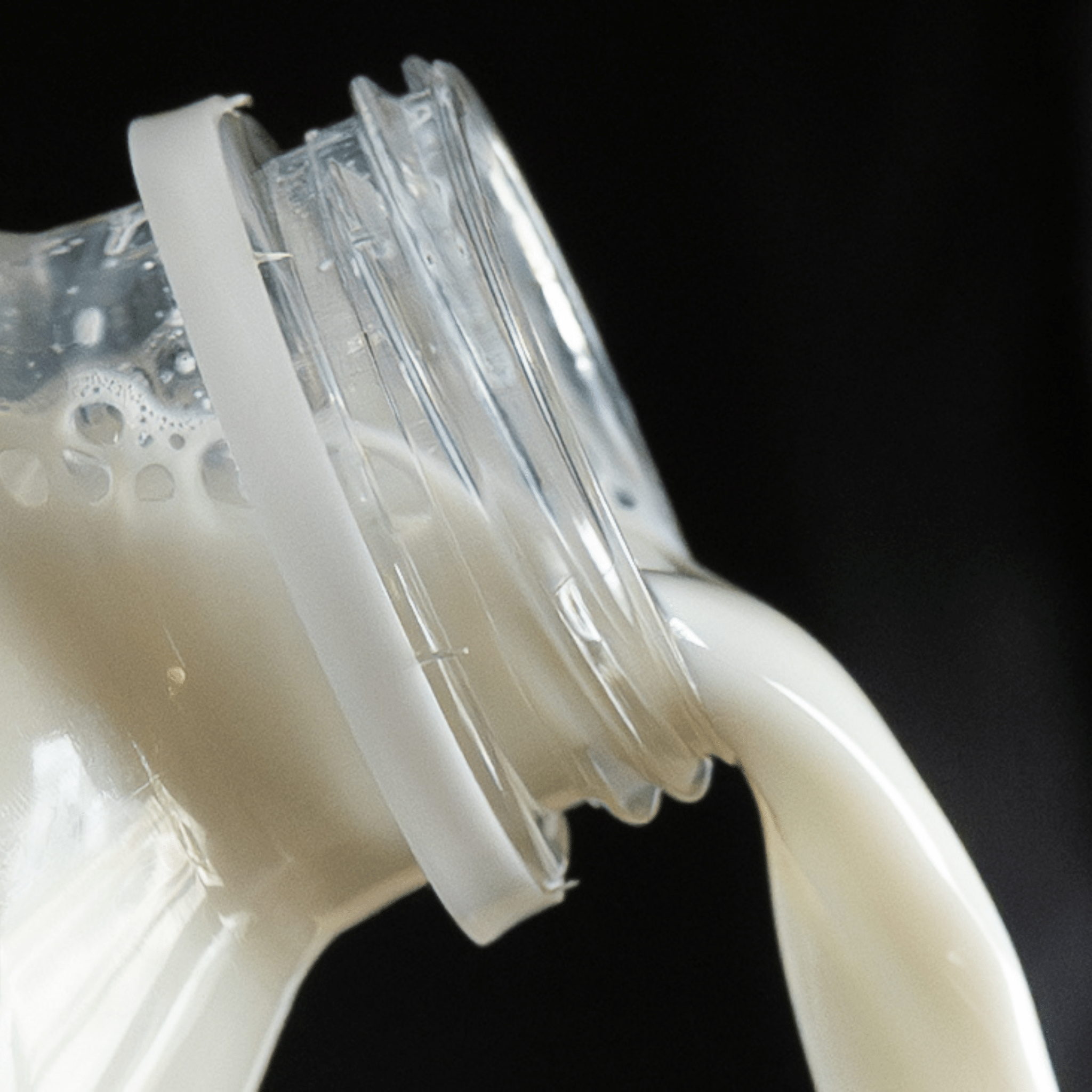
Camel milk pours like a light 2% milk and has a bright, opaque white color. Photo: Juba Farms.
Is Camel Milk Gamey? Does It Taste Like Goat Milk?
No. This is the biggest myth about camel milk, and it's worth clearing up.
When people ask what does camel milk taste like, goat milk is usually the comparison they fear. Goat milk has a distinctive tang that people often call "goaty." Researchers tie that flavor to a group of fatty acids (caproic, caprylic and capric acid) that can make up around 15% of goat milk's fatty acid profile, compared with no more than about 5% in cow's milk (study). Camel milk comes from a different animal with its own makeup, and when it's fresh and handled well, it tastes far closer to a glass of cow's milk than to goat milk.
So where does the "gamey" reputation come from? Usually from milk that's past its best. Any milk can pick up off flavors from age, heat or rough handling, whatever animal it comes from. That's why the way camel milk is stored and thawed matters so much (more on that below).
If you want the full side-by-side on nutrition, cost and more, read our cow milk vs camel milk vs goat milk comparison.
Camel Milk Taste vs Cow Milk: What's Actually Different?
If you are wondering what does camel milk taste like next to the milk already in your fridge, the short version is that camel milk and cow's milk are close cousins on the tongue. The differences are small, but here's what you'll notice when you taste them side by side:
- Less sweetness. Camel milk is naturally a little lower in lactose (milk sugar) than cow's milk on average, so it reads as less sweet. It still contains lactose, just typically a bit less.
- A cleaner finish. Cow's milk can leave a slightly sweet, creamy coating. Camel milk tends to finish cleaner, sometimes with that faint touch of salt.
- A lighter feel. If you drink whole milk, camel milk will feel lighter. If you drink 2%, it'll feel familiar.
- The same jobs in the kitchen. It goes into coffee, tea, cereal, smoothies and baking just like the milk you already buy.
Pour a glass of each side by side and you may also notice camel milk looks a shade whiter, thanks to those small fat globules.
Why Camel Milk Tastes Different From Place to Place
If you tried camel milk on a trip to the Middle East or the Horn of Africa and remember it tasting saltier or sharper, you're not imagining it. So the answer to what does camel milk taste like depends partly on where it comes from. Camel milk changes with the camel's life, the same way honey changes with the flowers nearby.
Scientists who study camel milk point to a few main reasons (review):
- What the camels eat and drink. The plants in the grazing area affect flavor, and so does the quality of the drinking water.
- How much water they get. When camels go short on water in harsh conditions, the milk's lactose drops and its minerals concentrate. The taste shifts from sweet to sharp and salty.
- The season. Lactose content moves with the season, temperature and feed, so milk from the same herd can taste a little different through the year.
- Freshness and handling. How quickly milk is chilled, how it's pasteurized and how it's stored all show up in the glass.
For many Somali and East African families, caano geel (camel milk) has been a daily staple for generations. Milk from camels with steady feed and water tends to taste milder and more consistent from glass to glass.
Our camel milk comes from a U.S. farm. Our camels are grass, hay and alfalfa fed, with steady feed and water through the year, which is a big part of why our milk tastes mild and consistent from bottle to bottle.
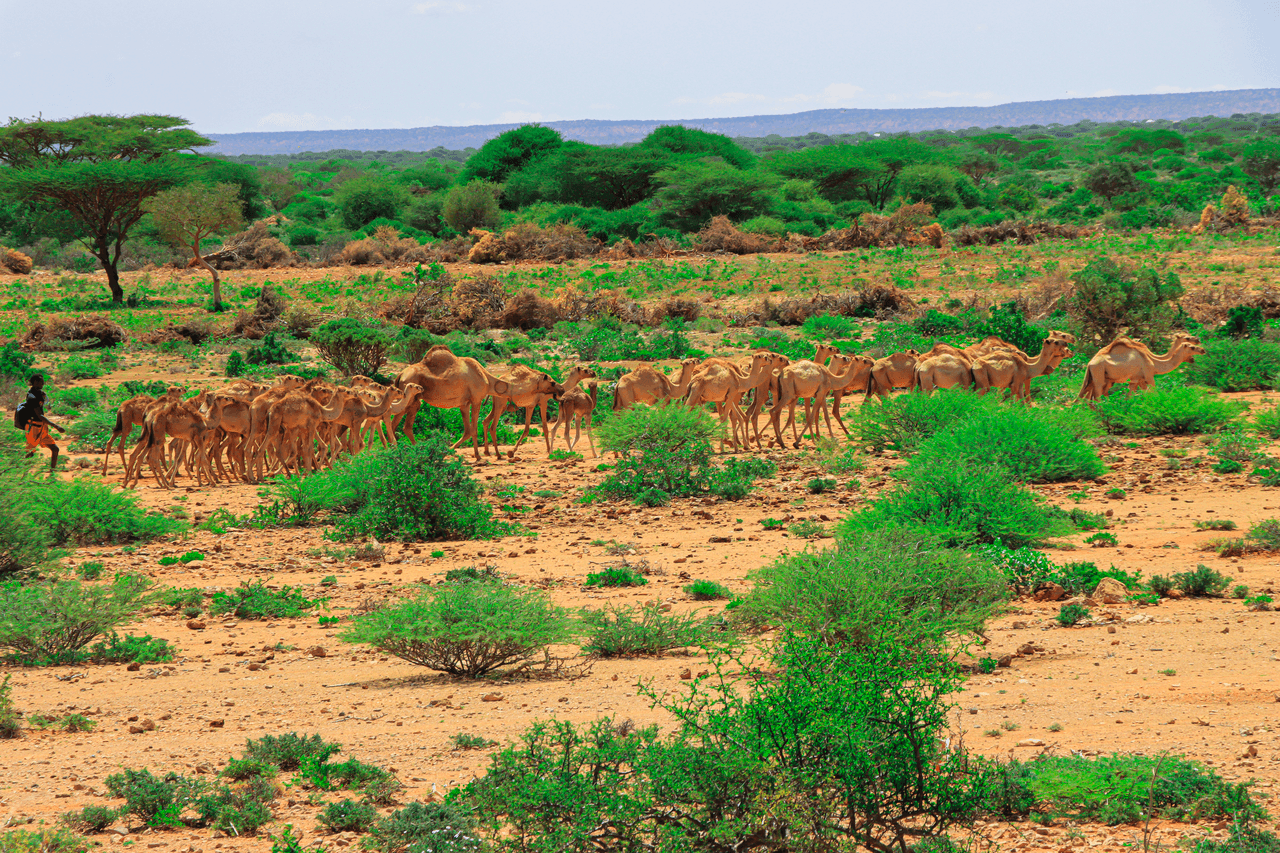
Camels grazing after the rains in the Mudug region of Somalia. What camels eat and drink shows up in the glass. Photo: Omar Gadood via Wikimedia Commons, CC BY-SA 4.0.
Does Frozen Camel Milk Taste Different? How We Recommend Tasting It
Frozen equals fresh. We ship our camel milk frozen so it reaches you tasting the way it should, and freezing locks that flavor in. What changes the taste isn't the freezing, it's the thawing. Here's what we tell anyone asking what does camel milk taste like before their first bottle:
- Thaw it in the fridge, not on the counter. Slow and cold is the way to keep the flavor clean. Move the bottle from the freezer to the fridge ahead of time, and give the 1 liter bottle a little longer than the 16 oz. If it is still partly frozen, let it finish in the fridge rather than rushing it with heat.
- Shake it well. It's normal for thawed camel milk to separate a little. A good shake brings it back together. Here's why camel milk separates after thawing and why it isn't a sign of spoilage.
- Taste it cold and plain first. Pour a small glass straight from the fridge. That's the truest read on the flavor.
- Then try it the way you drink milk now. Add it to your coffee, your tea or your cereal and see how it compares.
- Keep it cold once it's thawed. Once thawed, refrigerate it and enjoy it within 14 days. Pour what you need and put the bottle straight back in the fridge.
Want the details on how frozen compares with fresh for nutrition and everyday use? Read fresh vs frozen camel milk: does it matter?
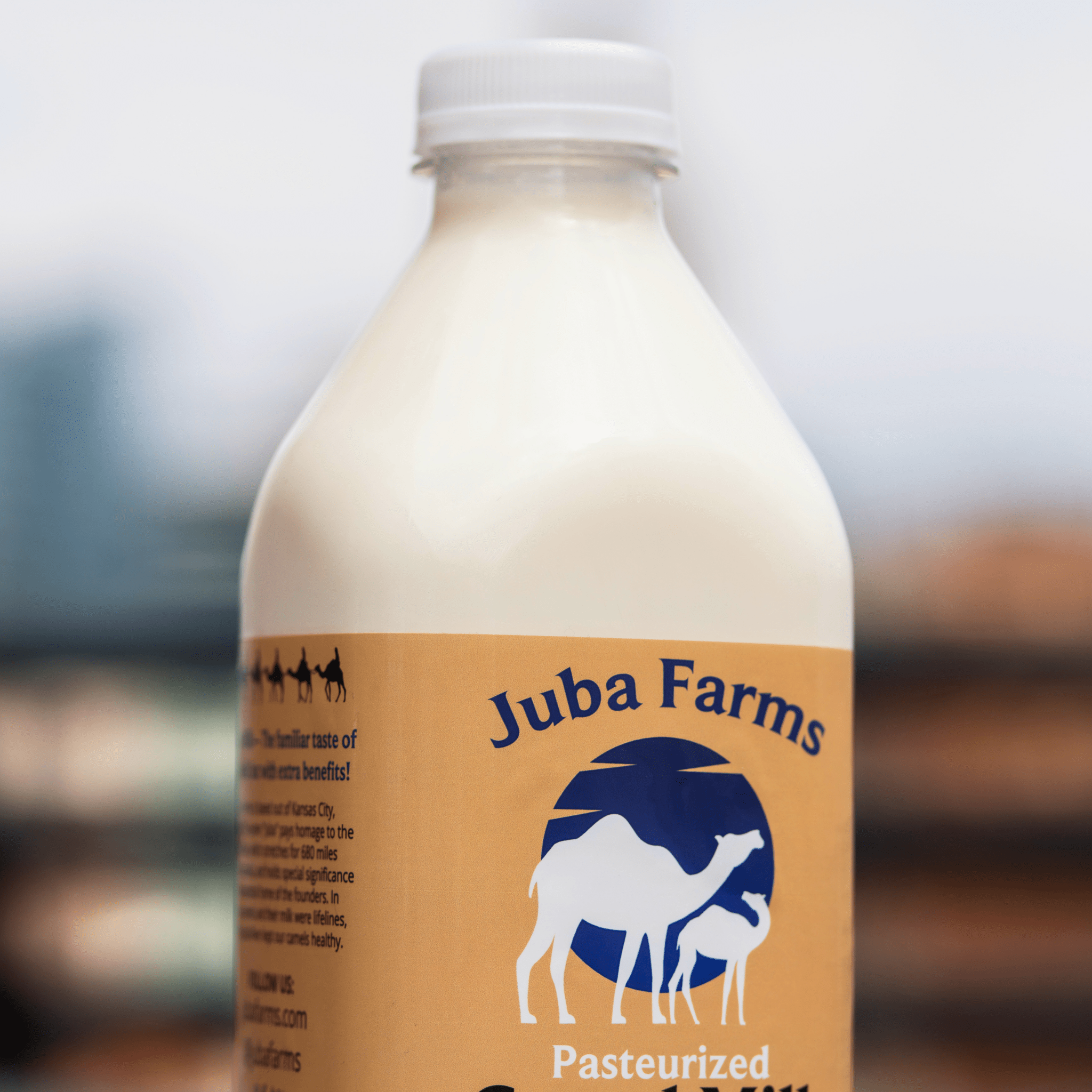
Our camel milk is pasteurized, frozen and shipped cold. The only ingredient is camel milk. Photo: Juba Farms.
Does Camel Milk Taste Good? Easy Ways to Try It
Taste is personal, but here's a fair rule of thumb: if you enjoy a glass of 2% milk, there's a good chance you'll enjoy camel milk. In the end, what does camel milk taste like? Milk, just a little lighter and less sweet.
If you'd like to ease in, these are simple places to start:
- Cold and plain, in a small glass, so you get the real flavor.
- With cookies. That faint salty finish works like a sweet-and-salty pairing, which is exactly how the Washington Post's taster enjoyed it (The Washington Post).
- In coffee or chai, where it blends in like any other milk.
- In a smoothie with banana or dates, if you'd rather start with something familiar.
- In recipes like pancakes, oatmeal or a creamy pasta sauce. Try these easy camel milk recipes.
The best way to settle what does camel milk taste like is to pour a glass yourself. Ready to taste it? Our camel milk comes from a U.S. farm, is pasteurized and frozen, and ships cold with our cold-shipping guarantee. If you are not satisfied with the freshness and taste, reach out to us and we will make it right. Pick 16 oz or 1 liter bottles; orders start with a 3-pack.
Sources
- Juba Farms Nutrition Facts label and 16 oz bottle label (43% less fat, 25% more iron, 3x vitamin C vs cow milk)
- USDA FoodData Central: Milk, reduced fat, fluid, 2% milkfat, with added vitamin A and vitamin D (FDC 171267)
- USDA FoodData Central: Milk, whole, 3.25% milkfat, with added vitamin D (FDC 171265)
- A Review on Camel Milk Composition, Techno-Functional Properties and Processing Constraints (PMC11222694)
- Effect of Herbal Feed Additives on Goat Milk Volatile Flavor Compounds (PMC10418787)
- Judkis, M. "Camel milk contains more vitamin C and iron than cow's milk. But how does it taste?" The Washington Post, June 13, 2018
Photo credits: Top photo by Shahadusadik via Wikimedia Commons, CC BY-SA 4.0. Camel herd photo by Omar Gadood via Wikimedia Commons, CC BY-SA 4.0. Bottle photos by Juba Farms.